New Mexico’s weather is going against “tradition” this year. My neighborhood has not yet experienced a freeze, but we had copious amounts of rain in October, and even now lighter showers continue. It’s been weeks since I watered my yard.
The results of that rain can be seen everywhere. Lush crops of mustard and dandelions edge my lawn and are covering my as-yet-unmowed backyard. My neighbor, who always has a row of sunflowers in the summer, has some promising sprouts that measure a foot or more.
When I was young, we were told to clean up our plates because kids were starving in Africa. After reading that starving Ukrainians are harvesting their weeds for food, I feel like these lush greens (never seen during an actual growing season), ought to be put to use. But I’m leery of experimenting on myself.
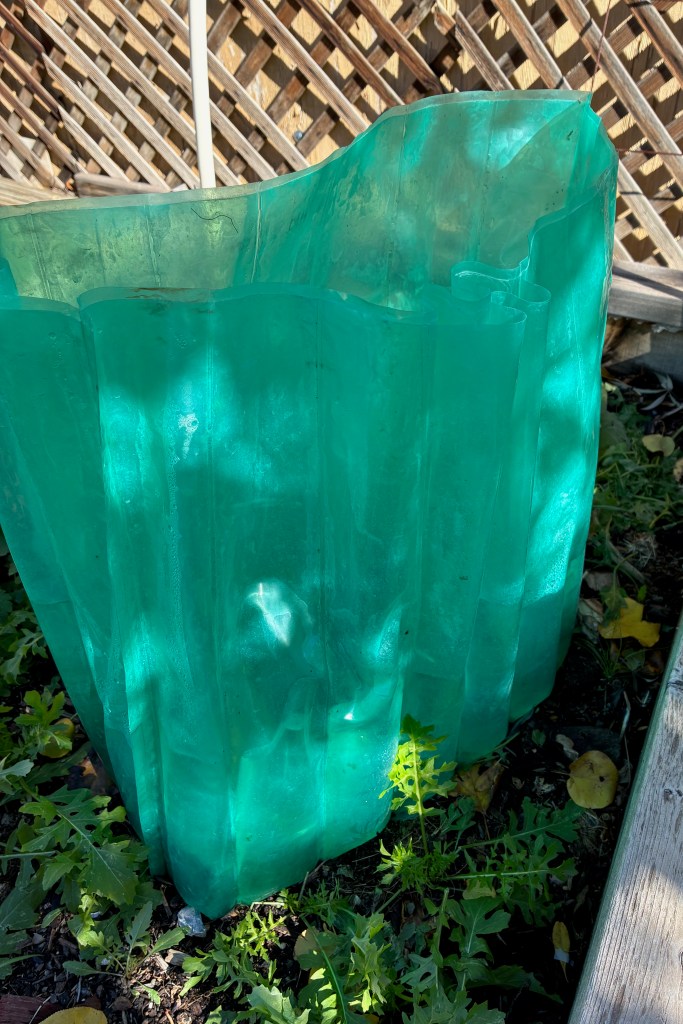
Other plants acting outside of the norm include the blooming Lady Banks roses along my back wall which, before now, have only bloomed in the spring. And amid the weeds in one of my raised beds is a tomato sprout. I’ve accepted that particular challenge and placed it (along with a squash sprout) inside a wall o’ water as an experiment to see if either one can survive until spring.
***
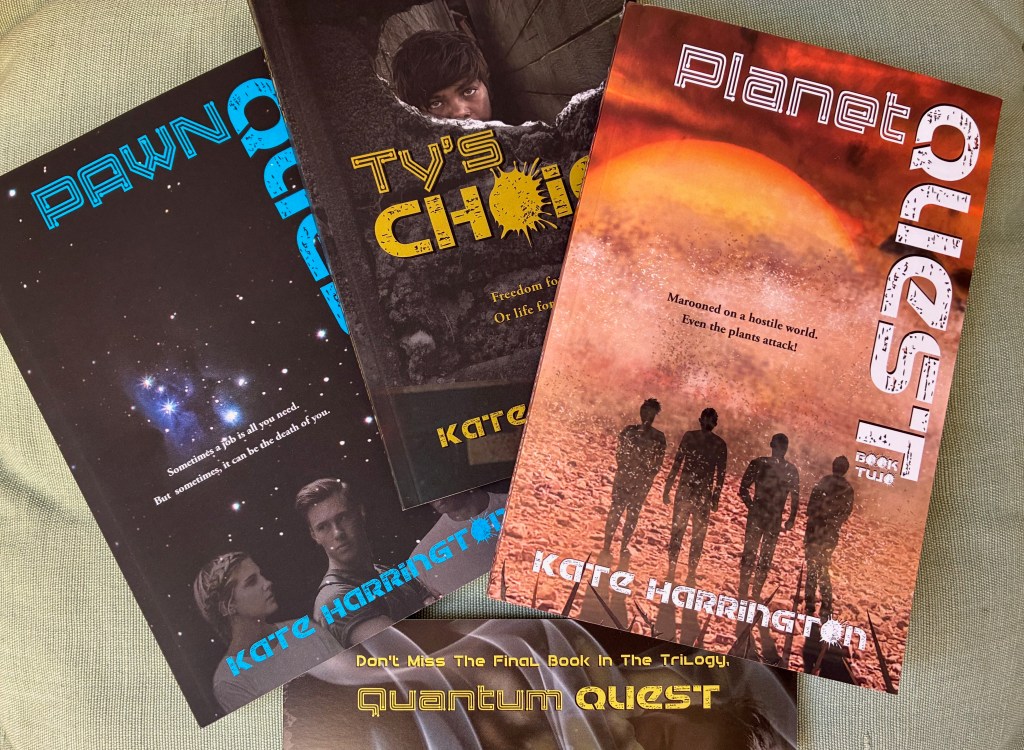
And speaking of crops, there’s my own personal crop of science fiction books. I’m currently reading aloud the conclusion, Quantum Quest, which completes the trilogy, in the hopes of catching any remaining errors, over-explainings, and the like. It is destined to go live to the public come January 2027, New Year’s Day if possible. Once this fourth title is out, the series and my half-century exploration of the future will come to an end. I feel much sadness in letting go of my cast of characters, but coming of age means it’s time they claim their independence.
The Pawn Quest trilogy, plus the middle grade Ty’s Choice, begin in a future Dodge City. People are chipped at birth: no more identity theft. They’ve come to terms with climate change, both in their living quarters and also by returning one half of Earth’s surface to the wild. Even AIs are (mostly) under control. But nothing is ever perfect . . .