I think one of the reasons I write science fiction, AKA speculative fiction, is the chance to imagine the world as it might become. I found science fiction at the library as a child.
It was sometime later that I discovered what I call speculative non-fiction. Big Foot, Yetis, extraterrestrial contacts with humans . . . Many were flights of the imagination with little connection to reality. But I read with an open mind, waiting till later to decide what I believed.
One topic I still believe in is Sir Alistair Hardy’s theory that humans went through a semi-aquatic period early in our history. Welsh writer Elaine Morgan popularized the Aquatic Ape theory, with her meticulously researched books. The theory explains, among other things, how we lost our fur, and why we’re born with a layer of subcutaneous fat.
Morgan was shunned by the scientific community two generations ago. From articles I read from time to time, I think research is being done now, but there’s an unwillingness to even mention the theory by name.

Oumuamua
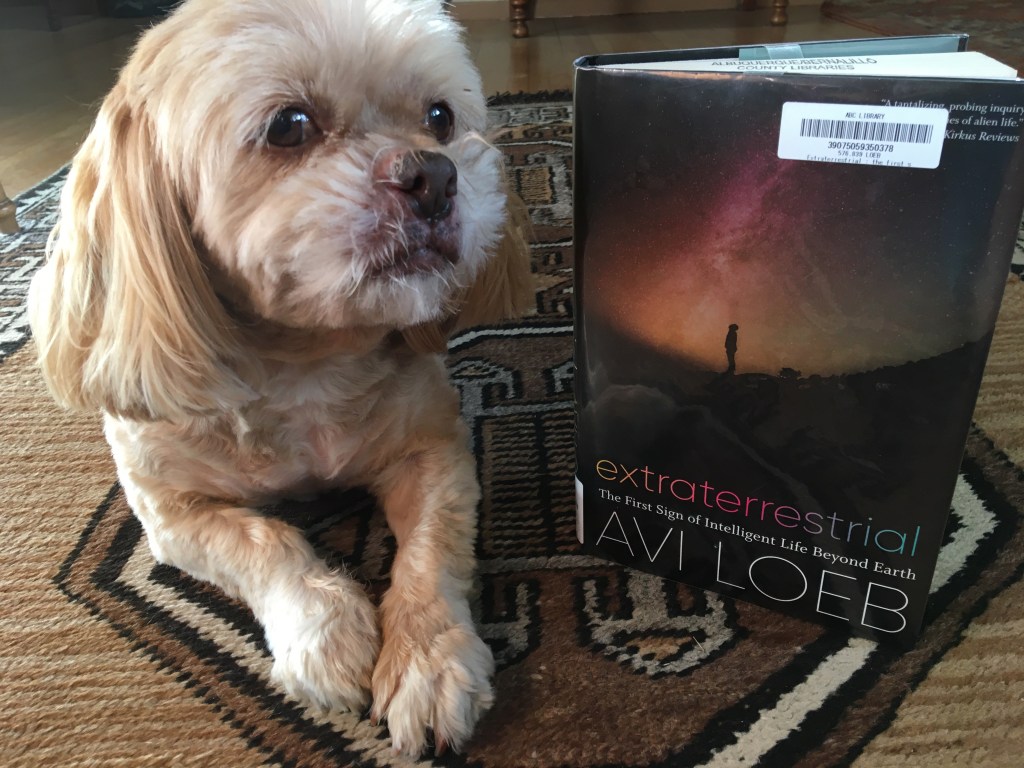
I’ve just read a library book by Avi Loeb, extraterrestrial, The First Sign of Intelligent Life Beyond Earth, about that fast moving object from interstellar space spotted in 2017, named Oumuamua, Hawaiian for “scout.” Loeb’s hypothesis is that it might have been “extraterrestrial technological equipment.”
There are many anomalies that make Oumuamua different from the usual comet or meteor. But Loeb is receiving a lot of pushback from his hypothesis. Is it that the scientific community doesn’t want to admit there might be other intelligence in the galaxy?
Loeb has headed Harvard’s astronomy department, and has led many research projects. He argues that the scientific community should be more open about their research—before announcing breakthroughs, since it’s our tax dollars paying for much of it. Also, publicizing research questions might inspire new generations to pursue science.
This particular question of other intelligent life in the galaxy is at the heart of many a science fiction story.
Loeb says: “But the moment we know that we are not alone, that we are almost certainly not the most advanced civilization ever to have existed in the cosmos, we will realize that we’ve spent more funds developing the means to destroy all life on the planet than it would have cost to preserve it.”
Avi Loeb elsewhere in the book says: “But no civilizations . . . will make the leap to migrating out among the stars if they are not smart enough to preserve their home planets . . .”
I say bravo! Why are we still pursuing nuclear weapons when we have a planet heating up, and need to devote all our energy and resources to saving Earth?
 Kate Harrington