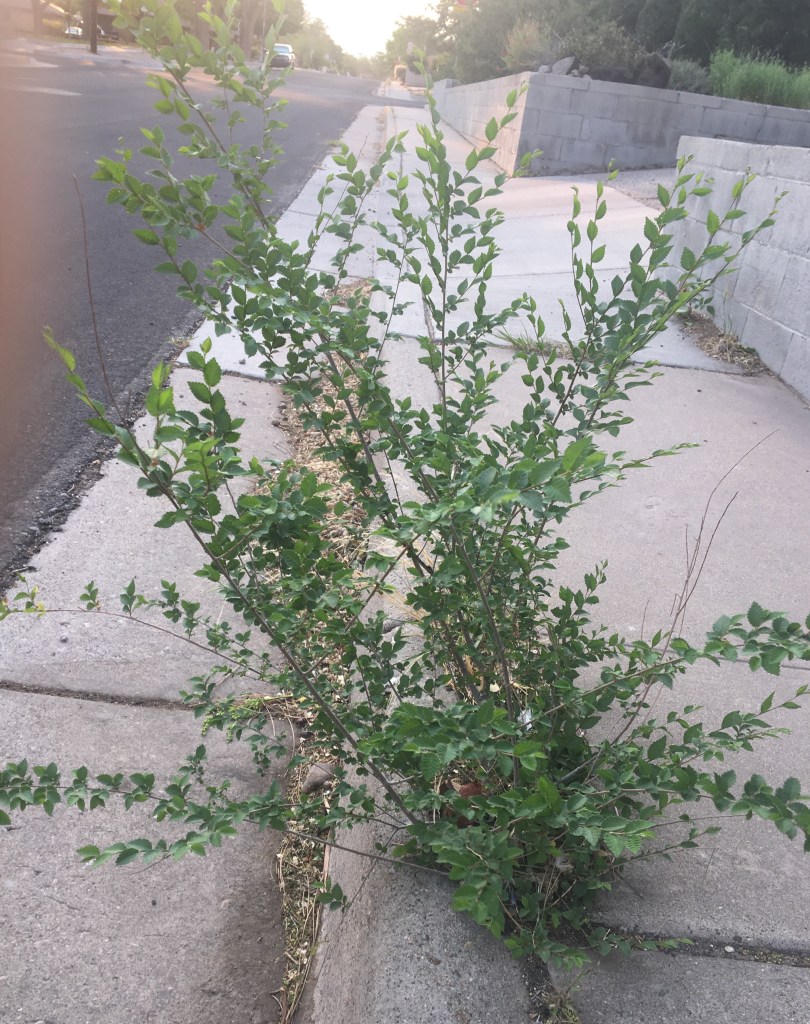
Weeds pop up in the most desolate of places, like between sidewalk and curb and in asphalt cracks.
A week or two ago I spotted a sunflower growing out of a sidewalk, but couldn’t find it again. Probably a neatnik homeowner demolished it. Usually wild sunflowers pop up in our backyard, but this spring must have been too dry.
My morning’s walk examining sidewalk cracks turned up nightshades; grasses; bindweed; an elm tree; amaranth; and a desert marigold (I think).
Some homeowners dump gravel on their bare yards. They don’t realize, besides the heat the gravel radiates, how much effort is required for upkeep. Wind-blown dirt and seeds imbed and rain brings up weeds from this most desolate of landscapes.
It reminds me of Alan Weisman’s fascinating book: The World Without Us, 2007. He says:
“On the day after humans disappear, nature takes over and immediately begins cleaning house—or houses, that is. Cleans them right off the face of the Earth. They all go.”
Not only houses. Untended pavements can break up, allowing water to percolate back into the aquifer. Forests and grasslands can revert to their wildlife. Wouldn’t it be wonderful to see forests allowed to expand across the globe?

or: What will crop up this week?
A whole week of not writing (Covid didn’t leave me much brain). Sometimes I came up for air and saw all the neglected household tasks.. Other times, I buried myself in sidewalk crannies.
Now into a new week and a fresher brain, I’m watering my latest outside sprouts: eggplant, spinach, and nasturtiums, while waiting for seeds to sprout on paper. Weeding comes later.
 Kate Harrington